Paper or Digital Stamp Card: When Paper Is Still Fine
Paper is still fine for a shop with a few dozen regulars you know by name and no plans to look at who they are. We make a digital stamp card, so you'd expect us to say otherwise. But the honest dividing line is one question: do you want to know who comes back, and be able to reach them? If so, go digital. If not, keep the stamp.
By The Rambla team, last changed , reviewed
What paper does well
- It costs almost nothing to start
- There's no setup, and nobody has to learn anything
- Customers get it at a glance
- Nobody has to hand over an email address
Those are real advantages, and for a pop-up or a shop that's mostly walk-ins they may be all you need.
Where it starts to cost you
A regular loses a card with six stamps on it, shrugs, and quietly decides not to start over. Another card gets a stamp it shouldn't have, because anyone with a copy of your stamp can add one. And at the end of the month you know exactly as much about your regulars as you did at the start, which is nothing.
Side by side
| Paper stamp card | Digital stamp card with Rambla | |
|---|---|---|
| To start | Print cards and buy a stamp | Set up your card online, then show your join code |
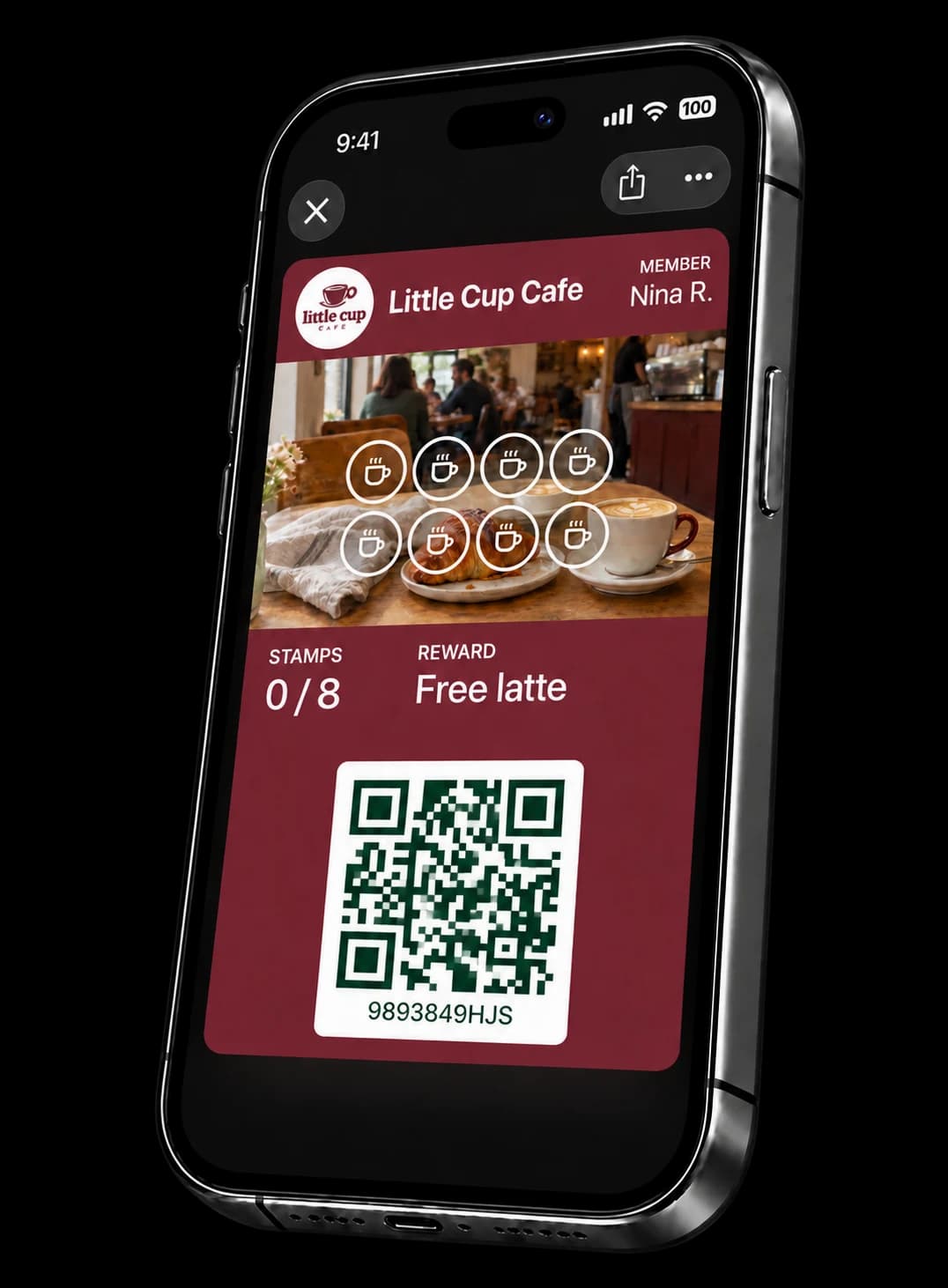
| For the customer | Carry a card and remember it | Scan a code once, and the card lives in their phone wallet |
| At the counter | Find the card, stamp it by hand | Your team scans the card with a phone to add a stamp or redeem a reward |
| Knowing who comes back | A paper card can't tell you | You see who your customers are and what they've earned |
| Cost | Printing, and reprinting when the reward changes | Rewards is $30 per month for each storefront, after a 60-day free trial. Your customers never pay anything. |
Digital isn't magic either
People belong to a lot of loyalty programs and use fewer than half of them. In Bond's 2022 survey, across 11 markets in North America and Europe, the average person held 16.6 memberships and was active in 7.6. A card in a wallet is easier to find than a card in a jacket pocket, but it still has to earn its place with a reward worth walking in for.
Wallet cards also can't ping a phone as often as you might like. Alerts on a wallet card follow the wallet's rules, not ours, and Google, for one, allows a business at most three updates that trigger a notification in 24 hours.
When we'd keep paper
- You have very few regulars and know them all
- Most of your regulars don't use a smartphone
- You're running a short pop-up
- You don't want to look at who your customers are or reach them
If you switch
- Decide what happens to stamps already on a paper card, for example by letting the customer finish it
- Put your join code at the register and tell regulars the card now lives in their phone
- Stop handing out new paper cards once the digital one is running
- After a month, look at who has joined and who hasn't
Who's talking
We make Rambla, a digital stamp card, so read the digital column with that in mind. We've tried to say where paper wins, because it does. Two outside facts are cited below. Nothing here claims digital cards raise sales, because we have no data that shows it.
Sources
- On average, people hold 16.6 loyalty program memberships and are active in 7.6, across 11 markets in North America and Europe: Bond, The Loyalty Report 2022, checked
- A business may send a maximum of 3 updates that trigger a push notification in a 24 hour period: Google Wallet developer documentation, Trigger push notifications for loyalty cards, checked
Before you decide
Do my customers need to download an app?
No. They scan your QR code and add the card to Apple Wallet on iPhone or Google Wallet on Android.
Can I keep paper cards while I switch?
Yes. Nothing stops you from running a digital card while you honor the paper cards your regulars already hold.
Is a digital card worth it for a very small shop?
It can be, if you want to know who comes back. If you don't, paper is simpler and costs less.